What Makes an Animal a Mammal? The 3 Traits That Count
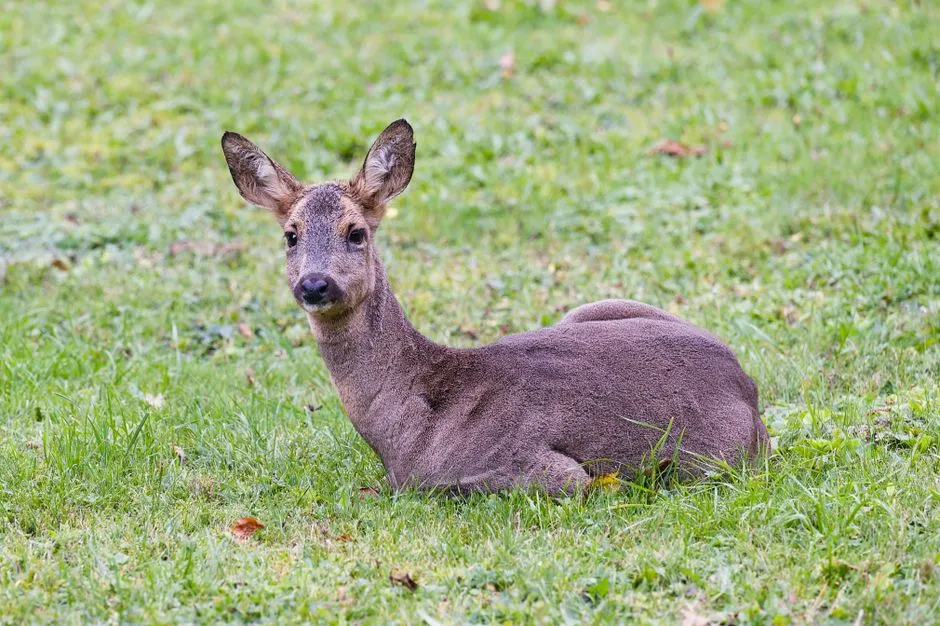
- What makes an animal a mammal?
- Which three traits do all mammals share?
- Which "mammal traits" are really just clues?
- The mammal checklist at a glance
- How can a platypus lay eggs and still be a mammal?
- Do whales and dolphins really have hair?
- Why are bats and whales mammals, and are humans?
- If birds are warm-blooded, why are they not mammals?
- How many species of mammals are there?
- How can you tell if an animal is a mammal?
- Sources
What makes an animal a mammal?
An animal is a mammal if it has three traits that no other living animal shares: hair at some stage of its life, mammary glands that make milk for its young, and three tiny bones in each middle ear. That is the whole membership card. Warm blood, live birth and a four-chambered heart are common in mammals, but none of them is the deciding test, because birds are warm-blooded too and the platypus lays eggs.
Which three traits do all mammals share?
The Animal Diversity Web, the species database run by the University of Michigan Museum of Zoology, names three characteristics that all mammals share and that are "not found in other animals": three middle ear bones, hair, and milk produced by mammary glands, which it describes as modified sweat glands.
Hair, at least for a while
Hair is a strand made of keratin (the same tough protein in your fingernails), and the Biology for Majors II course text at Lumen Learning calls it "one of the most obvious characteristics of mammals." The important small print is timing. The Animal Diversity Web says all mammals have hair at some point during their development, and most keep it their entire lives. A mammal does not need a fur coat to qualify. It needs hair at some stage.
Milk from mammary glands
Mammary glands are the glands that make milk, and every mammal mother feeds her newborns with it. That is the trait the whole group is named after: "mammal" comes from the Latin mamma, meaning breast. Notice what the rule says and what it does not. It requires milk from mammary glands. It does not require nipples, which matters a great deal for one small, duck-billed exception further down.
Three bones in the middle ear
Inside each mammal ear sit three tiny bones: the malleus, incus and stapes, often nicknamed the hammer, anvil and stirrup. They pass vibrations from the eardrum to the inner ear. According to the Lumen Learning biology chapter, other vertebrates (animals with backbones) move those vibrations with a single bone, the stapes. The same source explains that the extra two came from somewhere surprising: the malleus derives from the articular bone and the incus from the quadrate bone, both of which formed part of the jaw joint in mammals' ancestors. So the bones you hear with were, deep in evolutionary time, bones that something chewed with. Thrift is a family tradition.
Which "mammal traits" are really just clues?
Plenty of features show up in nearly every mammal without being part of the strict definition. The Animal Diversity Web lists several as "found in most mammals," and they make excellent supporting evidence:
- A one-bone lower jaw. The lower jaw is a single bone called the dentary. The Lumen Learning chapter adds that the jaw hinge connects the dentary to the squamosal (flat) part of the temporal bone in the skull.
- A muscular diaphragm. This sheet of muscle separates the chest cavity from the abdomen and powers breathing.
- A four-chambered heart. Two atria and two ventricles keep oxygen-rich and oxygen-poor blood apart.
- A secondary palate. This is the roof of the mouth that separates air and food passages, which is why a mammal can breathe and chew without much drama.
- Endothermy. Mammals make their own body heat and hold a fairly steady temperature, the condition loosely called "warm-blooded."
- Specialised teeth, replaced once. Mammals typically have different tooth types (incisors, canines, premolars and molars), and the Animal Diversity Web notes that teeth are replaced just once in a lifetime, a condition called diphyodonty. Your baby teeth were the first set. There is no third.
The word "most" is doing honest work in that list. Some mammals have no teeth at all as adults, giant anteaters and baleen whales among them, and they are still mammals because the three core traits are present.
The mammal checklist at a glance
This comparison sorts the usual suspects into membership rules and supporting clues.
| Trait | Do mammals have it? | Does any other animal? | What it tells you |
|---|---|---|---|
| Hair at some life stage | All mammals | No; feathers and scales are different structures | Defining |
| Milk from mammary glands | All mammals | No; pigeons feed chicks "crop milk," but it comes from the throat crop, not mammary glands | Defining |
| Three middle ear bones | All mammals | No; other land vertebrates use a single bone, the stapes | Defining |
| One-bone lower jaw (dentary) | Most mammals | No | Strong skeletal clue |
| Warm-blooded (endothermic) | Most mammals | Yes, birds | Clue only |
| Four-chambered heart | Most mammals | Yes, birds and crocodilians | Clue only |
| Gives birth to live young | Nearly all mammals | Yes, many sharks and some snakes and lizards | Clue only; the platypus and echidnas lay eggs |
| Lives on land | Most mammals | Yes, plenty | Irrelevant; whales and bats are mammals |
Read down the right-hand column and the pattern is clear. The three bold rows are the only ones that sort every animal correctly every time.
How can a platypus lay eggs and still be a mammal?
The platypus and the echidnas belong to a group called monotremes, and they are the reason "gives birth to live young" never made the definition. The Australian Museum explains that monotremes differ from other mammals because they lay eggs and have no teats. Instead, the mother releases milk through many pores on her belly. The same page notes that the female echidna lays a single egg into a pouch on her belly.
Run the platypus through the checklist and it passes cleanly: it has fur, it feeds its young milk from mammary glands, and it has the three ear bones. The Animal Diversity Web describes egg-laying as the most primitive reproductive condition in mammals, meaning it is the older arrangement, not a mistake. The University of California Museum of Paleontology sums monotremes up the same way: warm-blooded, hairy and milk-producing like other mammals, but laying eggs rather than giving live birth.
The Australian Museum describes the cast list: the platypus, the short-beaked echidna (the only echidna species in Australia), and three species of long-beaked echidna in New Guinea.
Do whales and dolphins really have hair?
Yes, at least briefly. This is the case that tests the "at some point during development" clause. The Animal Diversity Web says that adults of some species lose most or all of their hair, but even in whales and dolphins hair is present during at least some phase of development. A sleek adult dolphin still nurses its calf on milk and carries the three ear bones. Its breathing habit is also why dolphins have such an unusual approach to rest, which we cover in how dolphins sleep without drowning.
Why are bats and whales mammals, and are humans?
Because habitat and lifestyle are not on the card. A bat flies, a whale swims, a mole digs and a cheetah sprints, yet each one has hair, makes milk and hears through three middle ear bones. Wings, flippers and paws are adaptations to a way of life. The definition only cares about the shared kit underneath.
And yes, humans qualify on every point: hair, milk, three ear bones, a single-bone lower jaw and one replacement set of teeth. You have been a mammal your whole life, so congratulations on your long and distinguished membership.
If birds are warm-blooded, why are they not mammals?
Because warmth is a clue, not a rule. Birds make their own body heat and have four-chambered hearts, so on those two traits alone they look like mammals. But birds grow feathers, not hair, do not make milk in mammary glands, and hear through a single middle ear bone. Three strikes on the three traits that count.
How many species of mammals are there?
More than older textbooks suggest. The Animal Diversity Web still gives a round figure of about 5,000 species in 26 orders, while the Mammal Diversity Database of the American Society of Mammalogists, which tracks taxonomic changes as they are published, recognises 6,904 species in its version 2.5, of which 113 are recently extinct, across 27 orders. The gap is mostly a story about classification: as researchers study animals more closely, some populations once lumped together are recognised as separate species. Treat any single number as a snapshot, not a fixed fact.
Within that range of species sits a striking range of sizes. The Animal Diversity Web notes that the smallest mammals, among the shrews and bats, can weigh as little as 3 grams, while the blue whale, the largest animal known to have lived, can weigh 160 metric tons. Somewhere in the middle sit long-lived giants like the elephant, whose lifespan we untangle in how long elephants live.
How can you tell if an animal is a mammal?
In everyday life, you rarely get to inspect anyone's ear bones. A practical order of evidence works well:
- Look for hair, fur or whiskers. If you see any, you are almost certainly looking at a mammal. Feathers mean a bird; dry scales usually mean a reptile.
- Watch for nursing. A young animal drinking milk from its mother settles the question outright.
- Ignore where it lives. Water, sky, burrow or treetop tells you nothing about membership.
- Do not lean on eggs or live birth. Egg-laying monotremes are mammals, and live-bearing sharks are not.
Fossil hunters work the other way round: they check the jaw and ear region first, because bone outlasts fur by millions of years. For more profiles built on this checklist, browse our mammals section.