How Do Dolphins Sleep Without Drowning?
- Dolphins sleep with half the brain at a time
- Why whole-brain sleep would be risky
- What unihemispheric sleep means
- Dolphins still surface to breathe
- What a sleeping dolphin looks like
- One eye open does more than prevent collisions
- Do dolphins dream?
- Sleep time is difficult to reduce to one number
- Calves make the pattern more complex
- How dolphin sleep differs from sea-turtle rest
- Human noise can interrupt rest
- The short answer is divided awareness
Dolphins sleep with half the brain at a time
Dolphins sleep through a pattern called unihemispheric sleep: one brain hemisphere enters a sleep state while the other remains more alert. The active side helps coordinate surfacing, breathing, slow movement, and awareness of the surroundings. The hemispheres alternate, and one eye may remain open.
This is not “never sleeping.” It is a different solution to a problem land mammals do not face. A dolphin lives in water, breathes air through a blowhole, and controls each breath rather than relying on the same automatic rhythm humans use throughout sleep.
Why whole-brain sleep would be risky
A human can become unresponsive in bed and continue breathing without deciding when to inhale. A dolphin must reach the surface and open its blowhole at the correct time. If its whole brain became deeply unresponsive underwater, a missed surfacing could be fatal.
The ocean adds other demands. A resting dolphin may need to:
- maintain a stable body position;
- avoid obstacles and predators;
- remain with a calf, mother, or group;
- monitor currents and nearby animals; and
- coordinate when to surface and breathe.
Keeping one hemisphere partly alert lets essential behavior continue while the other rests. NOAA describes the same general strategy in whales and dolphins, although visible sleep behavior differs among species.
What unihemispheric sleep means
The brain has left and right cerebral hemispheres. During unihemispheric slow-wave sleep, electrical activity associated with sleep becomes stronger in one side while the other side remains in a more wake-like state. Later, the roles switch.
This alternating pattern separates dolphins from mammals whose two hemispheres normally enter sleep together. It also explains the phrase “sleeping with one eye open.” An eye connected to the more alert side may stay open while the other closes, helping the animal monitor its environment.
That eye phrase is a visible clue, not a complete test. Scientists use brain activity, muscle tone, breathing, movement, and behavior to study sleep. A photograph of one closed eye cannot establish a whole sleep cycle.
Dolphins still surface to breathe
Dolphins are mammals with lungs, not fish with gills. Air enters through the blowhole at the top of the head. Underwater, the blowhole stays closed; at the surface, muscular control opens it for a rapid exhalation and inhalation.
During rest, the alert hemisphere helps preserve this sequence. A dolphin may swim slowly and surface at a steady rhythm, or rest near the surface and rise as needed. The breath remains an active event rather than a background reflex ignored by the sleeping animal.
This is why the answer to “How do dolphins avoid drowning?” is not that they hold their breath for an entire night. They divide rest into a form compatible with repeated breathing.
What a sleeping dolphin looks like
There is no single posture that identifies every sleeping dolphin. Observed patterns include:
- slow, repetitive swimming;
- quiet floating or drifting near the surface;
- resting in a group with coordinated movement;
- alternating which eye is open; and
- reduced activity during a regular part of the daily cycle.
Some cetaceans rest in a position sometimes called logging because the back at the surface resembles a floating log. That term is more often associated with larger whales and should not be treated as the universal dolphin posture.
Behavior also depends on habitat. Hawaiian spinner dolphins, for example, commonly feed offshore at night and use nearshore areas for daytime rest. NOAA warns that close human activity in those resting areas can disrupt an essential part of their daily cycle.
Never approach, swim with, touch, feed, or chase a wild dolphin. Follow current local wildlife-viewing distances and vessel rules; a quiet-looking group may be resting even if individuals continue moving.
One eye open does more than prevent collisions
Visual monitoring can help a dolphin stay aligned with companions and detect a possible threat. Group living may add protection, but it also requires coordination. A mother and calf must remain together, and a pod moving slowly cannot let every member become fully unaware at once.
The alert side of the brain does not make the animal fully awake in the everyday sense. Unihemispheric sleep is a genuine physiological sleep state, not simply choosing to relax. The remarkable part is that rest and necessary awareness occur at the same time in different halves of the brain.
Social coordination during sleep is different from the reproductive partnerships described in animals that pair bond. A resting group may include relatives and companions without implying lifelong mates.
Do dolphins dream?
Researchers distinguish slow-wave sleep from rapid-eye-movement, or REM, sleep. In humans and many other mammals, REM is associated with vivid dreaming, very low muscle tone, and both hemispheres participating. Cetacean sleep does not map neatly onto that pattern.
Reports of REM-like states in dolphins are limited and debated, and behavior alone cannot reveal subjective experience. It is therefore not scientifically responsible to say confidently what dolphins dream about—or even that their internal experience matches human dreaming.
The evidence supports alternating hemispheric rest. Claims about dream content belong to imagination, not wildlife fact.
Sleep time is difficult to reduce to one number
Online answers often assign dolphins a fixed number of sleep hours per day. That precision can hide several problems:
- Dolphin species and populations have different daily routines.
- Calves, mothers, adults, and ill animals may rest differently.
- Wild observation, managed-care behavior, and brain recording measure different things.
- Rest occurs in bouts, and one hemisphere can sleep while the animal still moves.
A study may quantify the portion of time one hemisphere shows slow-wave activity, while a field observer records low-activity behavior. Those results should not be presented as interchangeable universal hours.
The useful statement is that dolphins obtain repeated, alternating rest across their cycle while preserving breathing and vigilance. A source offering one exact total should name the species, age group, setting, and measurement method.
Calves make the pattern more complex
Newborn dolphins must surface, swim, nurse, and maintain close contact with their mothers. Studies have reported very high activity and unusually little obvious rest in mothers and calves immediately after birth, followed by changing patterns as the calf matures.
Popular summaries sometimes turn this into “baby dolphins do not sleep for a month.” That wording is too absolute because sleep can be difficult to recognize and define in an actively swimming cetacean. It is safer to say early-life rest is reduced or organized differently in the studied animals.
How dolphin sleep differs from sea-turtle rest
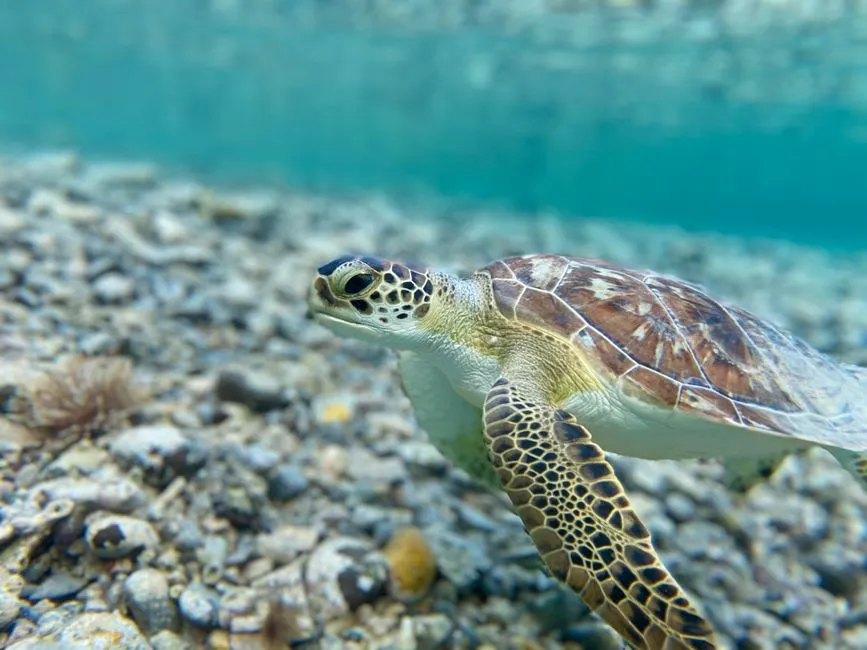
Sea turtles also breathe air and can remain underwater for long periods, but they are reptiles with different metabolism and sleep physiology. A resting turtle may settle underwater and surface periodically; it does not need a dolphin’s mammalian unihemispheric system.
That difference is one reason broad “ocean animals sleep like this” explanations fail. Our guide to sea-turtle lifespan likewise separates seven species rather than treating all marine turtles as interchangeable.
Human noise can interrupt rest
Engines, vessels, sonar, swimmers, and repeated close approaches can alter animal behavior even when no collision occurs. For a population using a predictable resting habitat, being repeatedly forced to move or increase vigilance can reduce the quality of that habitat.
Observe from a legal and responsible distance, avoid intercepting travel, and never interpret an open eye as permission to approach. Wildlife authorities, not a general article, define current local restrictions.
The short answer is divided awareness
Dolphins solve the breathing problem by dividing sleep across the brain. One hemisphere rests, the other maintains enough control to breathe and monitor the environment, and the roles alternate. They may swim slowly, float near the surface, and keep one eye open.
That system is neither full wakefulness nor human-style unconscious sleep. It is a specialized marine-mammal pattern that lets a dolphin rest without giving up the behaviors required to stay alive underwater.
Explore more carefully qualified marine facts in Ocean Life.